
Real estate secured debt, which includes both mortgages and home equity lines of credit (HELOCs), grew by $9.9 billion in April, driven almost entirely by the increase in mortgage balances.
Year-over-year growth in mortgage credit also continued to trend higher, reaching 4.7% in April, its fastest pace in two years.
That compares to just 3.4% growth at the same time last year and reflects a steady rebound from the post-pandemic slowdown.
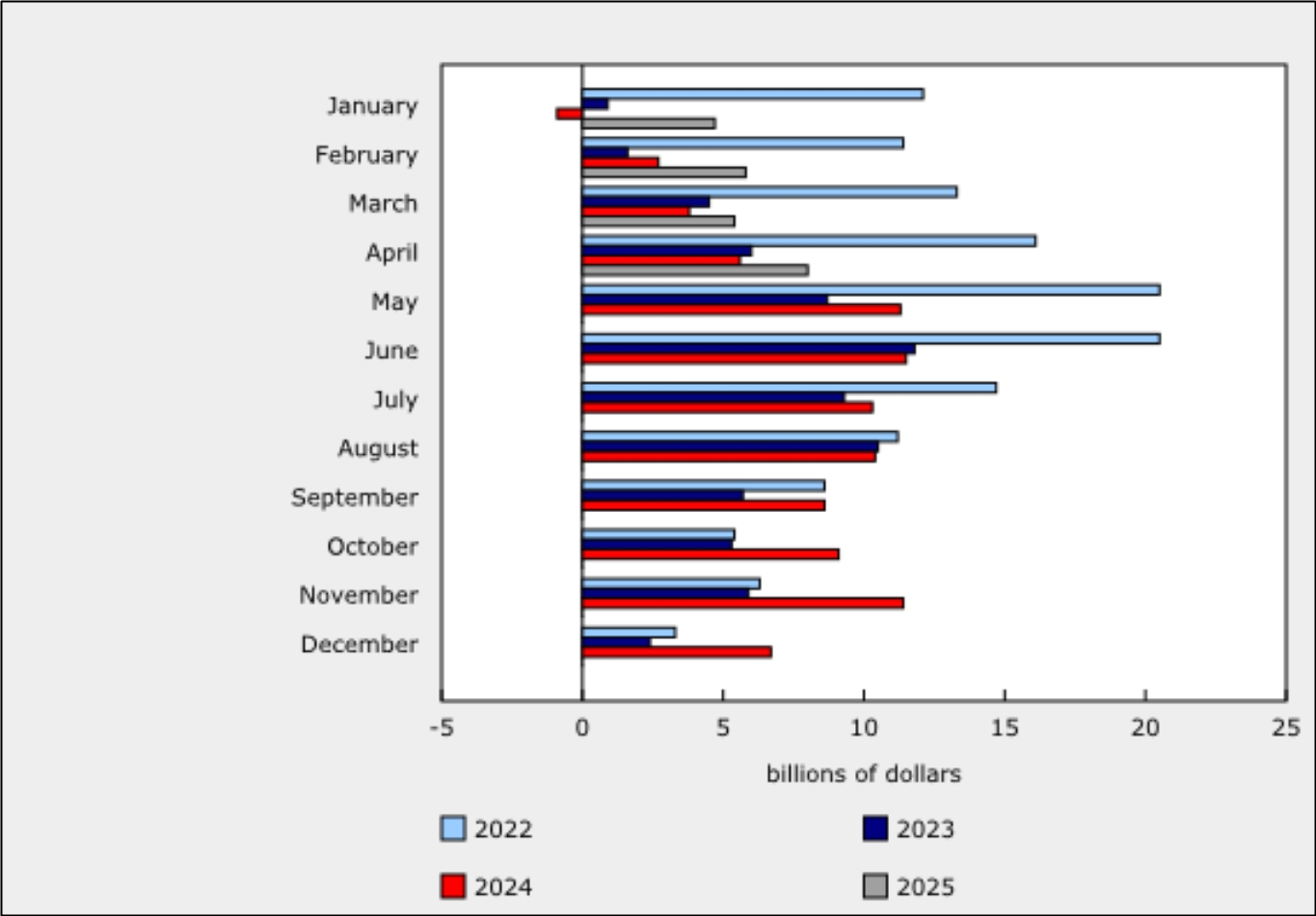
The increase in mortgage debt was one of the strongest for an April in recent history. At $8.0 billion, the monthly increase was higher than in April 2023 ($6.0B) and April 2024 ($5.6B), making it the largest April gain since 2022.
Monthly change in household mortgage balances
Total household credit liabilities increased by 0.3% in April (+$10.1 billion) to reach $3.08 trillion, slightly below the 0.4% growth recorded in March.
Non-mortgage borrowing was relatively flat in April, with total debt in that category rising just 0.1%, compared to a 0.4% gain in March. On an annual basis, non-mortgage credit growth eased to 3.9%, down from 4.4% in March.
Credit card debt edged down by 0.1%, the first drop since November 2024, while other personal loans saw modest gains.
Meanwhile, borrowing by private non-financial corporations fell sharply, with total credit liabilities down 0.9% (-$20.6 billion). This was due largely to a $15.5-billion drop in debt security liabilities, driven by exchange rate effects.
credit card debt credit trends Dashboard economic data Editor's pick household debt mortgage credit mortgage debt non-mortgage debt statcan statistics canada
Last modified: June 18, 2025