

According to CMHC, condominium apartment sales in Toronto have fallen 75% since 2022, while Vancouver saw a 37% drop as of Q1 2025. The sharp downturn has been driven by a combination of higher interest rates, reduced affordability, and waning investor appetite.
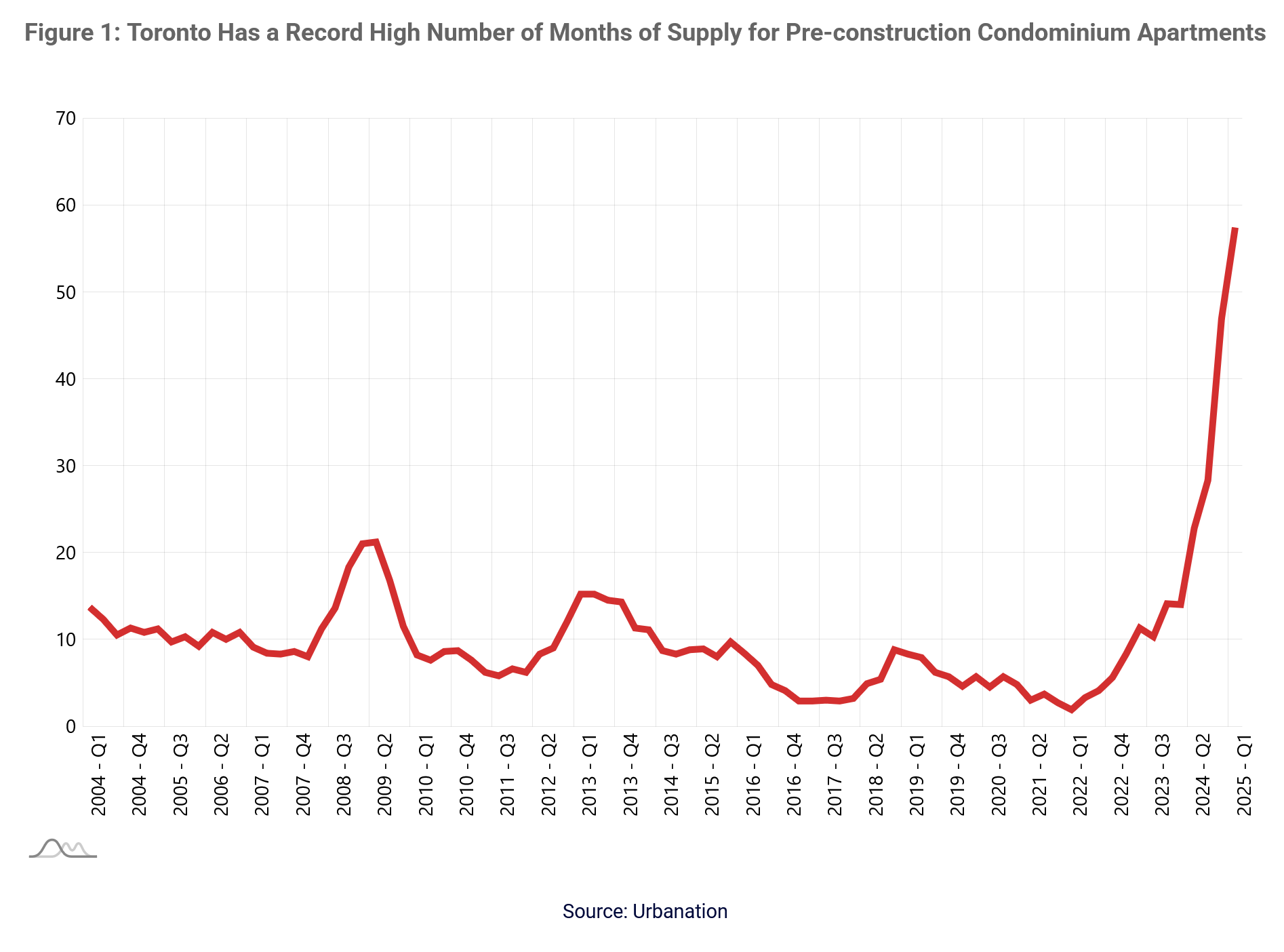
Meanwhile, inventories have ballooned. In Toronto, the months of supply for pre-construction condos surged to 58 months in Q1—14 times higher than in 2022. Vancouver is facing similar, albeit less extreme, challenges.
Falling prices, rising losses
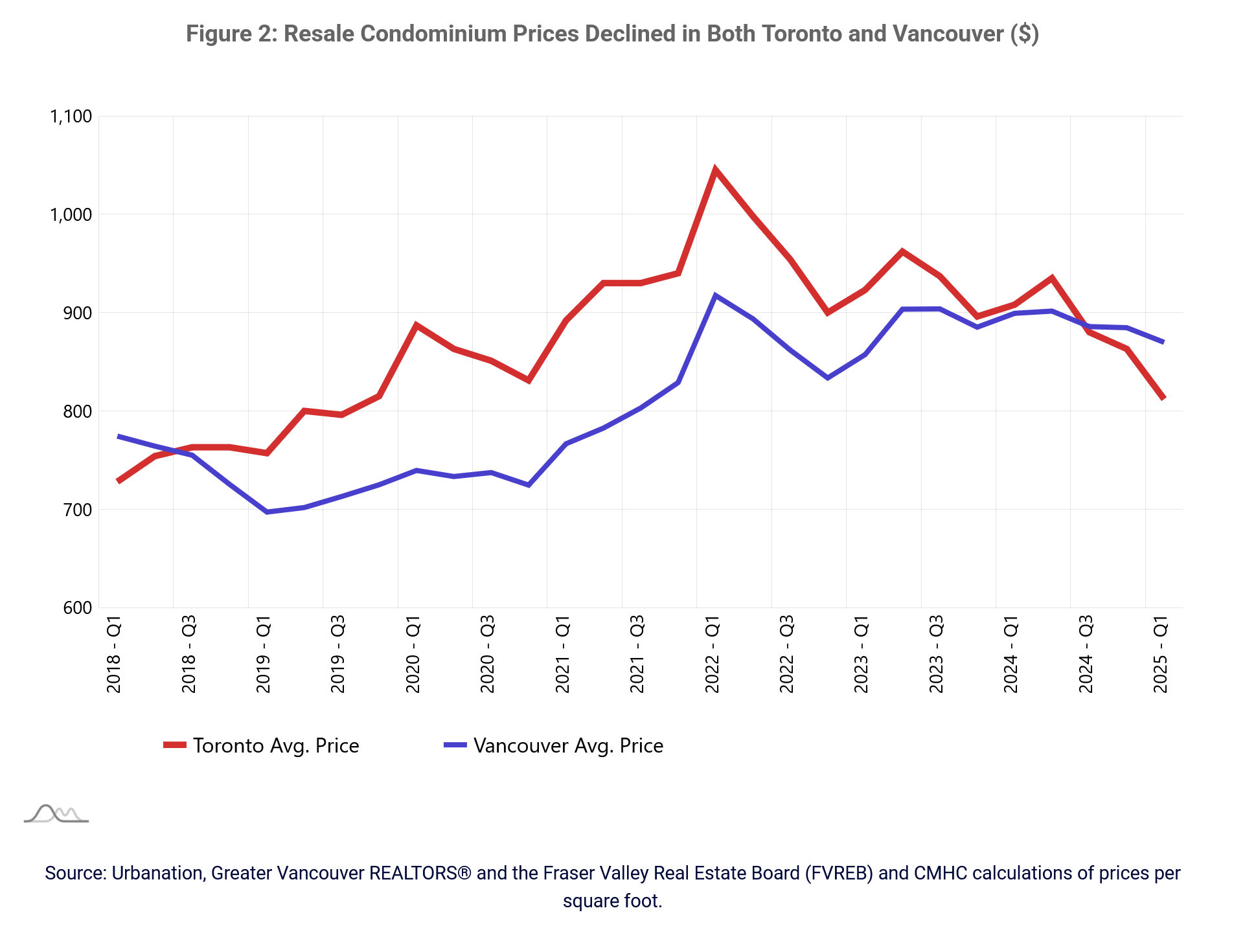
Condo resale prices have slipped 13.4% in Toronto and 2.7% in Vancouver since 2022, erasing some of the double-digit gains seen during the pandemic housing boom.
For investors who bought pre-construction units expecting continued growth, this has translated into potential capital losses of up to 6% on 2024 purchases in Toronto, the agency noted.
CMHC says profitability for investors in the Toronto and Vancouver condominium markets is “under pressure,” citing the effects of higher borrowing costs and stagnant price growth. Since 2022, investor carrying costs have risen 24% in Toronto and 29% in Vancouver, while rents have grown at a slower pace—15% and 12%, respectively.
As resale values dip below purchase prices, securing financing at closing has also become more difficult.
A wave of project cancellations
Unsold inventory is also delaying or derailing future construction. In Toronto, 55% of pre-construction units remained unsold in Q1 2025—just shy of the record 56% seen in late 2024.
That’s well below the 70% pre-sale threshold lenders typically require to release project funding.
These challenges have led to a wave of cancellations, with the number of cancelled condo units up five-fold in Toronto and 10-fold in Vancouver from 2022 to 2024. While some developers have pivoted to purpose-built rental projects, others have shelved plans entirely.
Short-term relief, long-term risk
For now, the slowdown has brought some relief for buyers and renters. Rents have moderated, and prices have softened, easing conditions in Canada’s two most expensive housing markets.
But that relief may come at a cost.
“The condominium projects cancelled today mean fewer housing completions in the future,” CMHC warned. “The relief for buyers and renters is temporary, with future housing shortages compounded.”
With completions expected to remain high and demand still subdued, CMHC sees continued pressure on prices and rents in the near term. But the longer-term concern is clear—today’s slowdown could deepen Canada’s structural housing shortage down the line.
Canada Mortgage and Housing Corporation CMHC condo investors condo market condo sales Editor's pick pre-construction real estate real estate investors
Last modified: June 11, 2025


Don’t worry about what COULD happen, or not in future. The goal is to bring hyper-inflated home prices down to a sustainable, affordable level for most. A price drop of 45-55% is reasonable otherwise there will be no future for majority of young people priced out of this artificially bloated market.